
Everyday meal planning · Denpasar, Bali
A practical guide to planning everyday meals
You can start improving how you eat before you ever book a consultation. This guide covers the basics of structuring meals, choosing what to keep in the kitchen, and reviewing how the week actually went. Use it on its own, or bring your notes to a session as useful context for your pre-assessment.
What this guide covers
A meal plan is a week you will actually cook
Planning only holds if it matches the week you have. Below you will find how to count the meals you genuinely cook, how to assemble a plate without a recipe, rough portion cues that need no scale, and how to shop two or three times a week instead of one big run.
Later sections cover breakfast and the afternoon dip, cooking once and eating twice, drinks and snacks, and eating at warungs or through delivery apps without dropping the plan.
Use it in this order
Work through the chapters in sequence on a first read. On a second pass, skip straight to the part that matches what is going wrong this week.
If you decide to book a consultation, the notes you keep along the way become your pre-assessment material.
Start here
Start with the week you actually have
Planning fails when it assumes a free evening that does not exist. Count the meals you realistically cook, note the nights you eat out or order in, and build from there. If you cook four dinners a week, plan four. A plan for seven when you cook four is a plan you will abandon by Wednesday.
Write the count down before you write the menu. Two lines on paper beat a detailed plan that ignores your Tuesday.
Build the plate
A meal is a base and a structure, not a recipe
Rice, noodles, or root
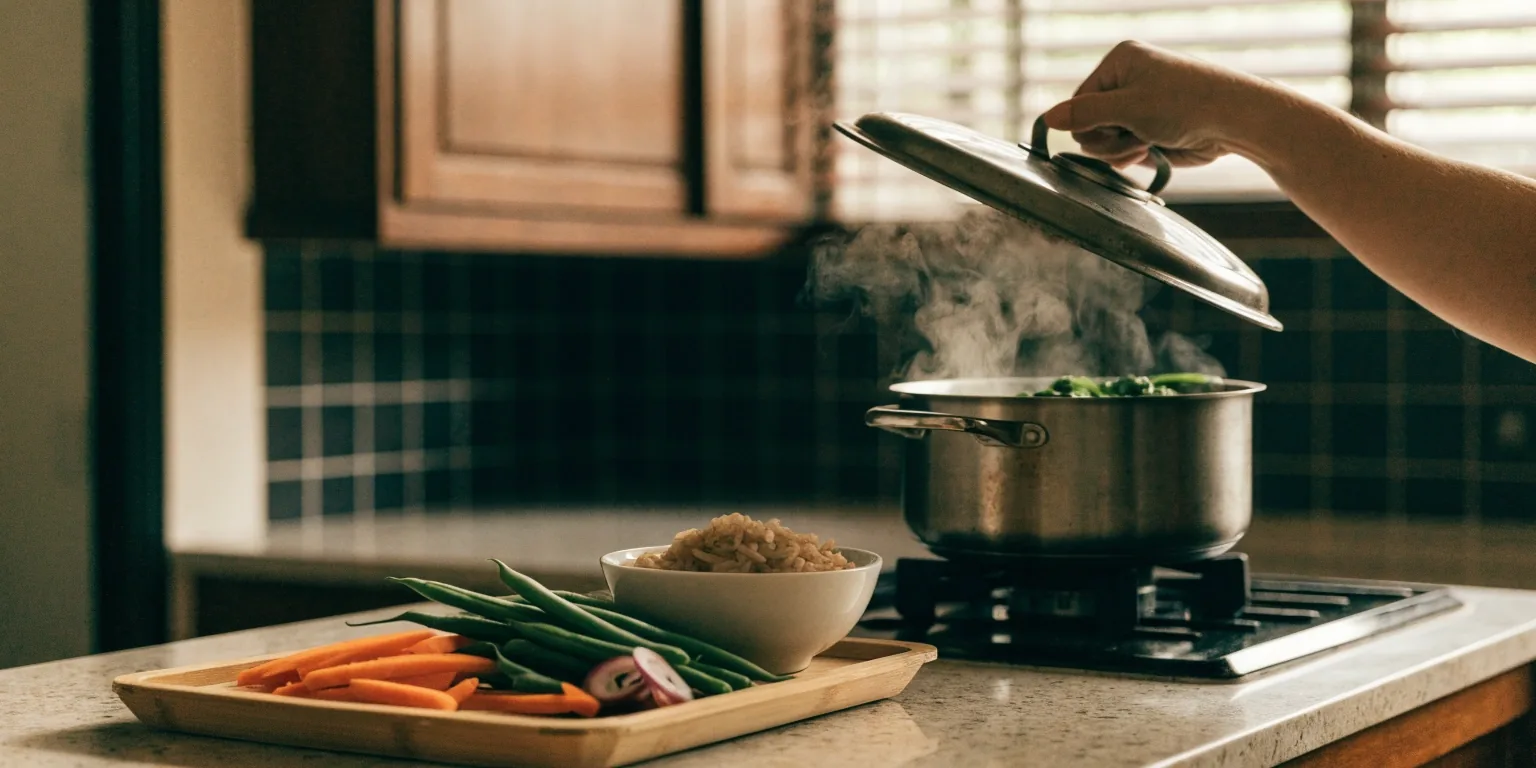
Most Indonesian meals already follow a workable shape: a staple, a protein, vegetables, and something for flavour. Once you see meals that way you can assemble one without a recipe. A plate of rice, grilled fish, sauteed greens and sambal is complete, and so is a bowl of noodle soup with an egg and vegetables added.
Fish, egg, tempeh or tofu
Keep two or three that you actually like and can cook on a weekday. Tempeh and tofu sit well in the fridge; a piece of fish from the market can go straight into the pan. A boiled egg is a complete answer when time is short.
Greens you will cook
Buy the ones that survive a few days and saute in minutes: kangkung, water spinach, long beans, cabbage, choy sum.
Portions
Serving sizes without weighing everything
You do not need a scale to eat sensibly. These are rough starting cues. Adjust from how you feel across the whole day rather than from a single meal. If you want closer guidance, that is a good topic for a consultation.
Treat the middle column as a starting point, not a rule. Anyone cooking for a child, an older relative, or managing a diagnosed condition should get portions set for the person rather than adopted from a guide.
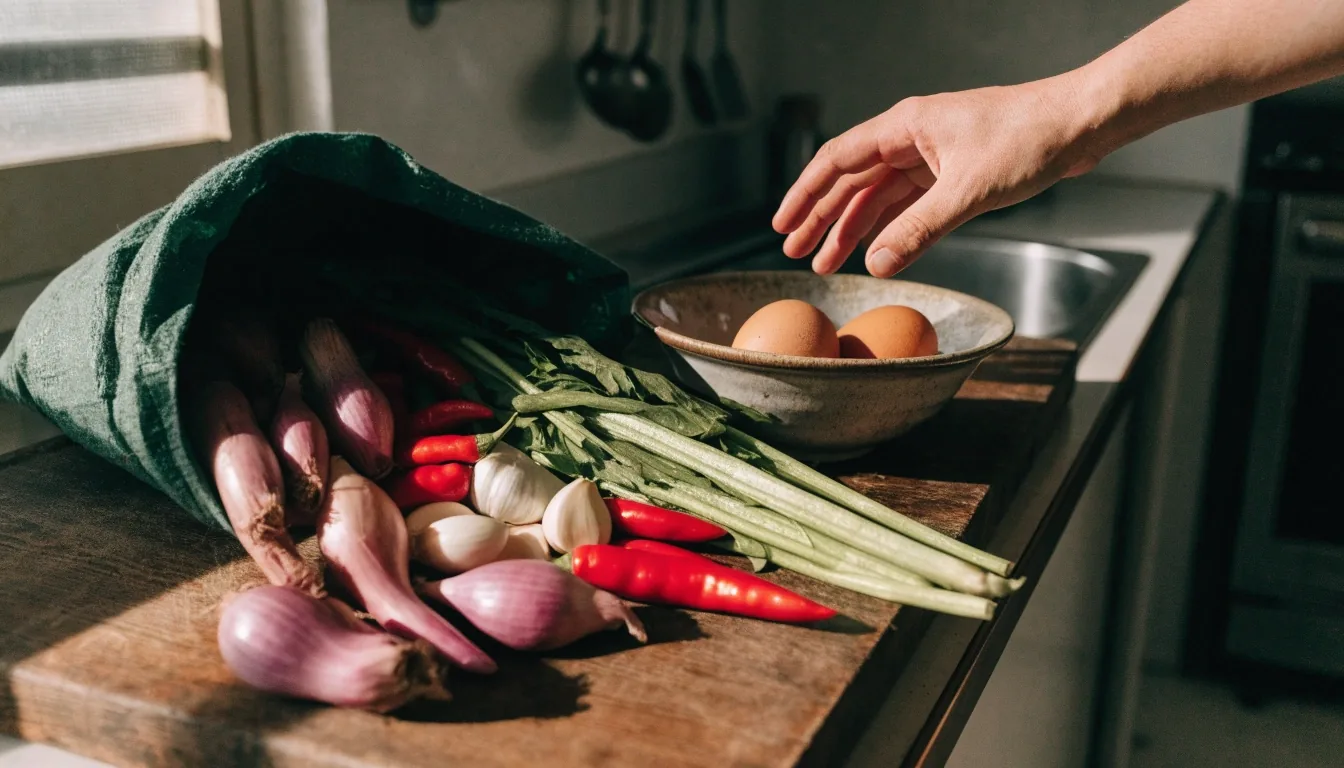
Buying from a pasar or a nearby warung usually beats a supermarket run on freshness and cost. Two or three trips a week keeps vegetables from wilting before you cook them.
Shopping
The local market beats a big run
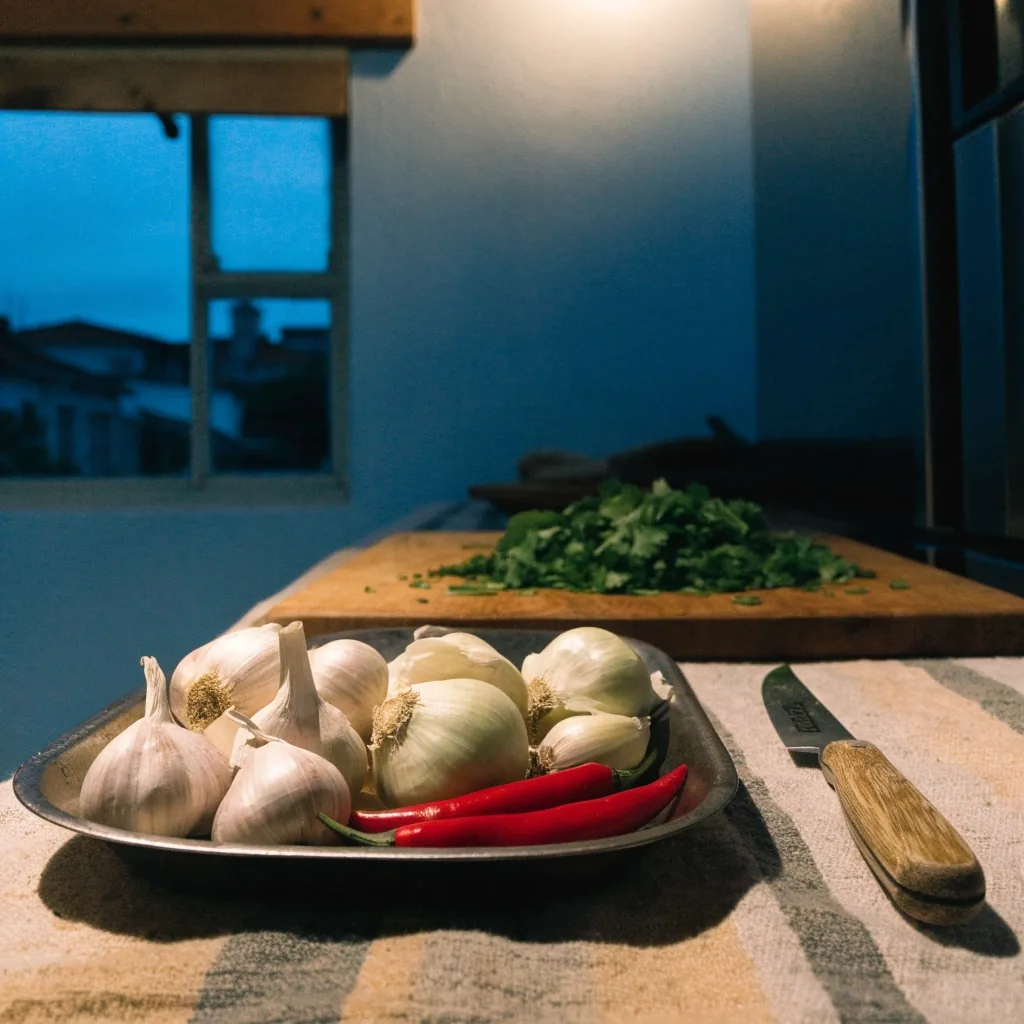
Keep a short list of staples that work in several dishes: shallots, garlic, chili, eggs, tempeh or tofu, and one green vegetable. Any of these can move between dishes without a new recipe.
Shop to the plan, not to the shelf. If you know you are cooking four dinners, three vegetables and one protein will carry them. Buying for seven means wilting greens by Thursday.
Across the day
Breakfast, lunch, and the 4pm dip
Breakfast
Breakfast does not have to be elaborate. Something with protein and fibre holds longer than sweet tea and a pastry, and it takes about the same time to make.
Two eggs and rice, or tempeh and greens, is a reasonable start.
Lunch
Lunch is often eaten away from home, so plan what you can carry or buy nearby. A rice bowl with a clear protein and visible vegetables is an easy default at most warungs.
If you usually order in, pick two or three regulars and rotate them.
The 4pm dip
The afternoon dip is worth watching for a week. Note what you ate at midday and how much you slept, then change one of the two and see whether the dip moves.
Keep the same notes for seven days before you change anything else.
Cook once
Cooking once, eating twice
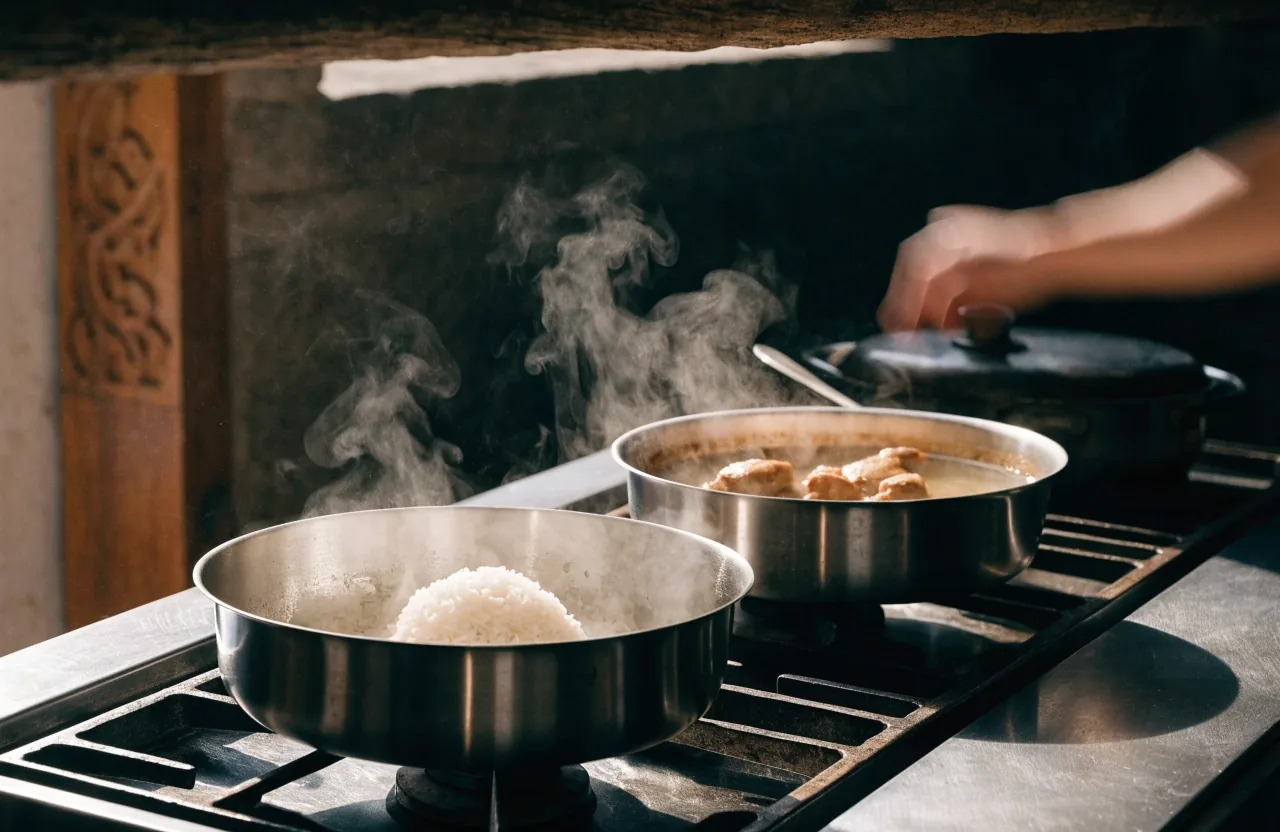
Batch cooking fits Indonesian cooking well. Cook a larger portion of rice, a protein and a vegetable dish, then rework the leftovers: yesterday's chicken becomes today's soup or a rice bowl.
This cuts cooking time without repeating the same plate twice. Store cooked food properly and use it within a couple of days.
Also easy to miss
Drinks, snacks, and sweet tea
Drinks are the easiest thing to overlook. Sweet tea, bottled juices and coffee with sugar can add up quietly across a day. You do not have to cut them out; notice how many you have and whether they leave you hungry an hour later.
Snacks work better when they include something with protein or fibre, like nuts, fruit or a boiled egg.
Sweet drinks
Count one week
Snacks
Add protein
Hunger gap
Watch the hour
Eating out
Eating out without abandoning the plan
Warungs, canteens and delivery apps are part of normal eating here. Choose dishes with visible vegetables and a clear protein, ask for less sugar in drinks, and treat a fried dish as one part of the meal rather than the whole thing.
Rotate where you eat so you are not relying on the same oily option every day of the week.
Quick check when ordering
- Can you see vegetables on the plate?
- Is there a protein that is not only fried chicken?
- Can the drink come with less sugar, or as plain water?
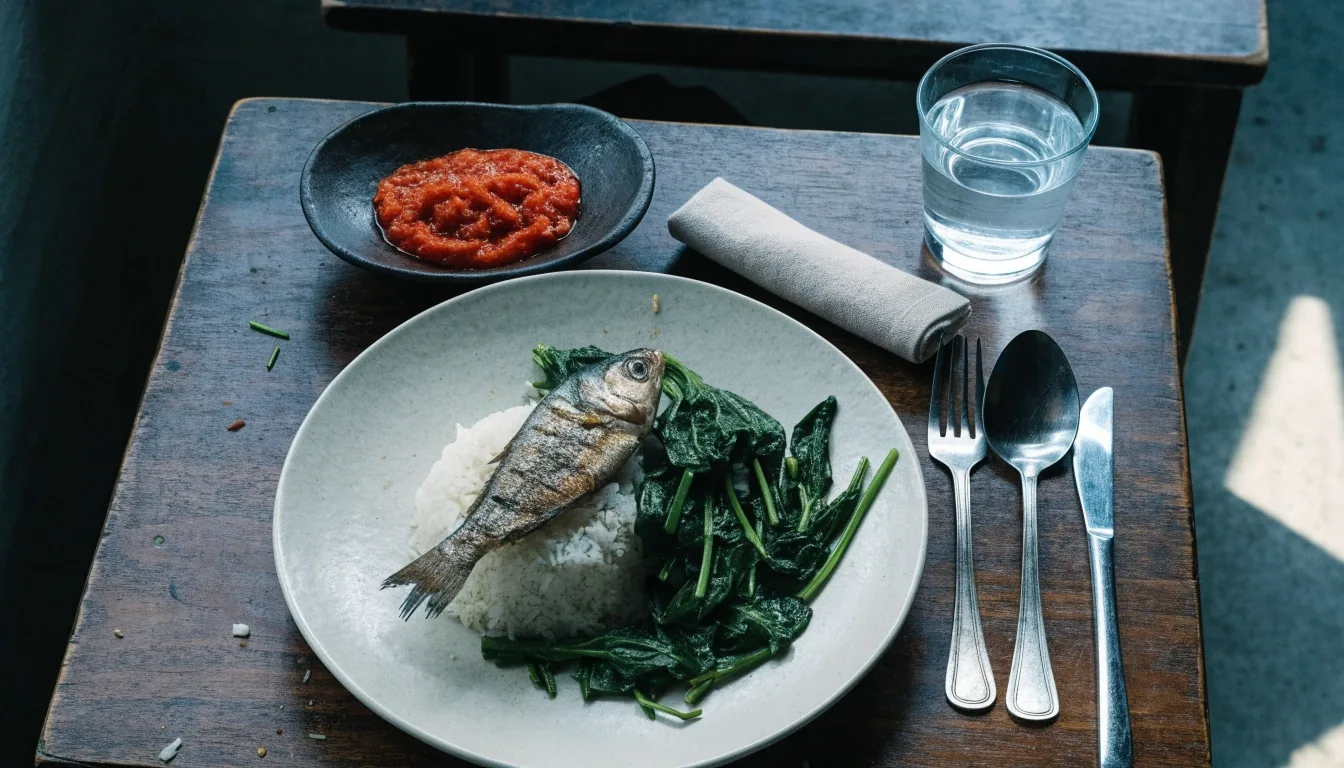
A plate like this already follows the base-plus-structure logic. You do not need a special menu to eat well at a warung.
Review
Monitoring dan evaluasi for yourself
Review your week in a few lines: what you cooked, what you skipped, what you ate instead. This is a simple version of the monitoring and evaluation a consultant does, and pre-assessment forms ask similar questions.
Without a review, every week feels the same. With one, patterns show up fast: the evenings you skip cooking, the days you drink more sweet tea, the meals you order instead.
Keep it to a few lines a day. This is the material you would bring to a consultation, and nobody needs more than one page for it.
Self-planning vs a plan built for you
When self-planning is enough, and when it is not
For many people, a few weeks of honest review is enough to see what to change. Consult a professional when you have a diagnosed condition, when you are planning meals for a child or an older relative, or when you have tried and want a plan built for your specifics. That is what the consultation service here is for.
This guide is general information about everyday food, not individual advice. It does not replace a consultation with a registered nutritionist.
Preparing notes for a consultation
If you decide to book, bring the notes you have been keeping. Having them ready makes the first session more productive.
- A rough food diary from one week, even a few lines a day.
- A list of what you cook most often at home.
- The questions you keep coming back to.
- Your allergies, and the foods you will not give up.
Common questions
Questions people ask before they book
A few more answers sit on the FAQ page if these do not cover what you need.
Do I need a consultation to use this guide?
No. Everything here is written to be used on its own. Booking a consultation makes sense when you want a plan built for your specifics, when a health condition is in the picture, or when you are cooking for someone whose needs differ from yours.
How long should I keep notes before changing anything?
One week is usually enough to see a pattern. If you change three things at once you will not know which one helped. Keep writing for seven days, then adjust a single item and keep watching.
Can I keep eating out at warungs and still improve?
Yes. Eating out is part of everyday eating here. Choose dishes with vegetables and a clear protein, ask for less sugar, and rotate the places you rely on. The plan should fit your actual week, not oppose it.
What happens after I register for a consultation?
You fill in a pre-assessment before the session so the nutritionist can look at your routine in advance. The steps and what each one involves are described on the consultation page, and the FAQ answers the rest.
When you are ready
Bring the week you actually had, not a perfect one
Register for a consultation when you want a plan built around your routine. The first step is a short pre-assessment; what you have learned here makes it easier to fill in.
Where to find us
Jl. Imam Bonjol No. 201, Denpasar, Bali, 80113, Indonesia
+62 361 224 889
Monday to Friday, 9:00 AM – 6:00 PM
Contact and registration details